
St. Charles, IL · Garage Door Service
Detached or Attached: It Changes What the Door Has to Do
How St. Charles' 1958-2009 housing stock and cold winters change what matters on a detached garage door versus one built into the house.
- Repairs & new doors
- Springs & openers
- Serving 7 nearby communities
What Is Going On
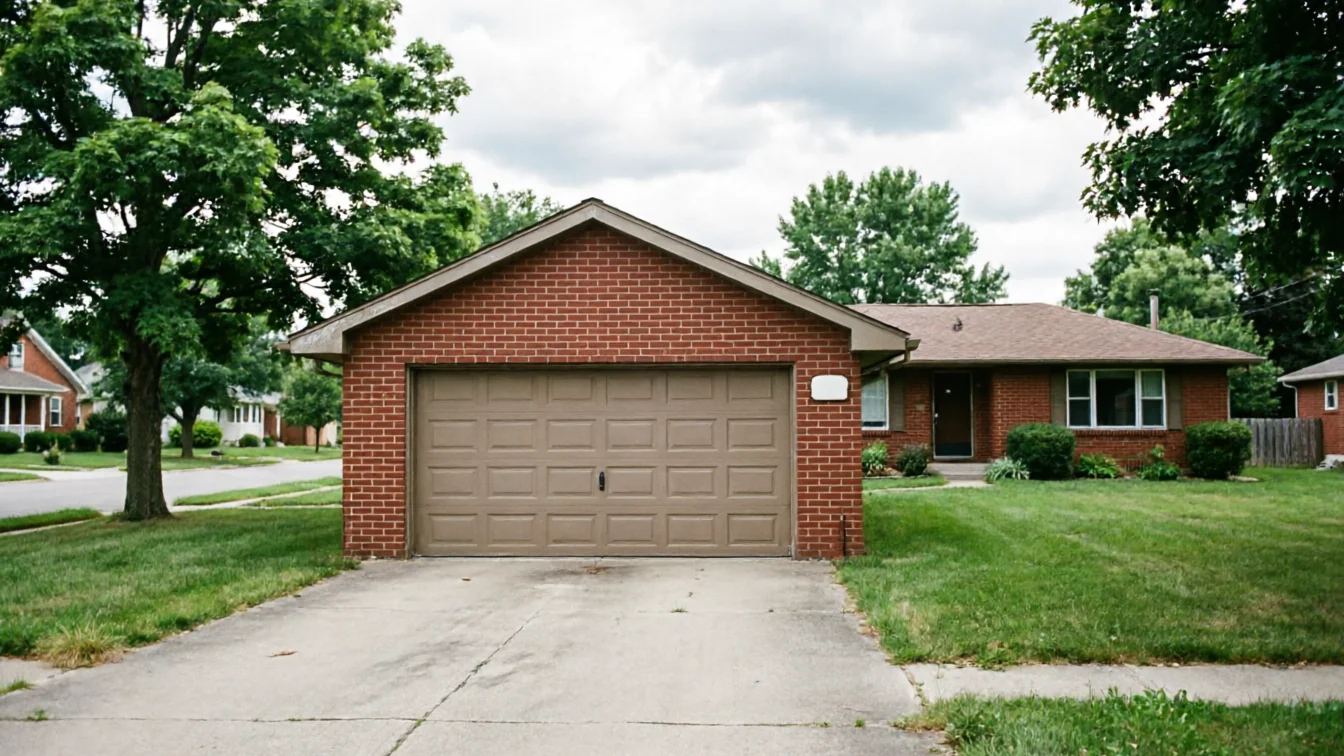
A lot of garages in St. Charles were built as part of the house, not as a separate structure out back. With housing here running from 1958 up through 2009 and the median landing around 1981, you've got a long stretch of construction styles mixed together - older detached garages built off a driveway, and newer attached garages built right into the house with a shared wall to the living space. That difference matters more than people think. On an attached garage, the door is basically part of your home's building envelope - it's between the heated house and the outside, and whatever comes through it (cold air, noise, exhaust) ends up inside your walls. On a detached garage, the door is the whole building envelope. There's no house on the other side absorbing the problem. If the door doesn't seal right or the panel's dented, that's it - nothing between the gap and the weather. The track hardware, spring sizing, and insulation choice that make sense for one don't always make sense for the other, even on houses built the same decade.
What to Look At First
If your garage is attached, check the seal where the door meets the wall that borders the house - that's the weak point that lets cold air sit against drywall and framing. If it's detached, the bigger concern is usually the door itself holding up on its own: panel condition, track alignment, and whether the opener and spring are sized for a door that isn't getting any help from an adjacent heated space. Houses built earlier in that 1958-2009 range, especially detached garages from the older end, are more likely to still have original hardware that was never upgraded for an insulated panel. That matters in a cold climate - an insulated door on a detached garage does more real work than one on an attached garage, because the detached structure has no other source of heat at all. Look at the bottom seal first on either type. It's cheap, it's the first thing to fail, and it's the one piece doing the most to keep weather out.
Doing Nothing For Now
Not every issue needs a same-week fix. A detached garage with a slightly worn bottom seal and no insulation isn't an emergency if you're not storing anything temperature-sensitive out there - it's a maintenance item, not a structural one. An attached garage is a different call. If the door isn't sealing against a wall shared with living space, letting that sit through a cold stretch can mean a cold wall and a higher heating bill, even if the door still opens and closes fine. I'll be honest: I'm not going to tell you to replace a functioning door just because it's original to a house built in the 1980s. If the spring's rated right and the panel's not cracked or bowed, it can keep going. Where I'd push you to act sooner is anything touching the shared wall on an attached garage - that's the one spot where a small gap turns into a bigger comfort or moisture problem inside the house itself.
How Local Conditions Play In
St. Charles sits in a cold-moderate climate band, which means winter is the season that actually tests a garage door, not summer. On a detached garage, cold just sits in the space - there's no heat loss to worry about because there's no heat to begin with, so the priority is keeping the structure dry and the hardware from binding up when it's cold enough that steel contracts and grease stiffens. On an attached garage, cold air pushing through a bad seal works against your furnace, not just your comfort. With housing stock here mostly dating from the 1980s and 90s, a lot of attached garages were built before double-layer insulated doors were standard, so the door itself may be original and uninsulated even if the rest of the house has been updated. That's worth knowing before you assume a drafty attached garage is a sealing problem - sometimes it's just an old single-layer door that was never built to hold heat back in the first place.
Frequently asked questions
Does it matter if my garage is attached or detached when choosing a new door?
Yes. An attached garage door is part of your home's insulation boundary, so an insulated door pays off directly in comfort and heating cost. A detached garage door is the entire building envelope on its own, so panel strength and sealing against weather matter more than insulation value alone.
My attached garage door is original to the house - is that a problem?
Not automatically. A lot of houses in St. Charles built in the 1980s and 90s still have original hardware that works fine. The issue is usually that older doors weren't built insulated, so if you're feeling cold through that shared wall, the door itself is often why.
Should I insulate a detached garage door?
It depends what the space is used for. If it's just parking and storage, it's not essential. If you spend time out there or store anything sensitive to cold, insulation helps more on a detached garage than people expect, since there's no adjacent heated space doing any of the work.
Related garage door services in St. Charles
More garage door guides
Book garage door service in St. Charles
Call now or request a quote - tell us what the door is doing and where you are.