
St. Charles, IL · Garage Door Service
Why Your Garage Door's Safety Sensors Keep Drifting Out of Alignment
St. Charles houses built mostly 1958-2009 have garage doors with sensors set on brackets that shift. Here's what causes drift and what to check first.
- Repairs & new doors
- Springs & openers
- Serving 7 nearby communities
What Is Going On
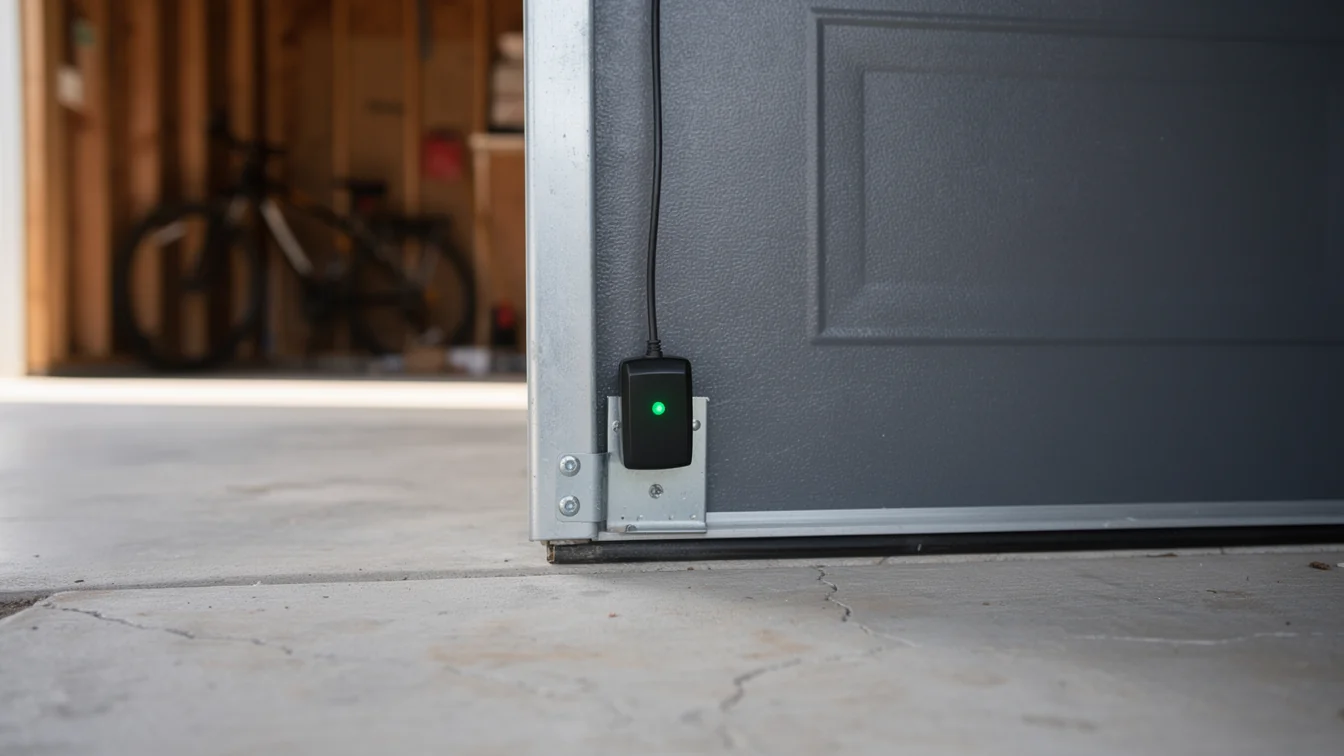
The safety sensors on your garage door - the two eyes near the bottom of the track - aren't complicated. They shoot an invisible beam across the opening, and if something breaks that beam, the door won't close. When they're aligned, a steady light glows on each side. When they're not, the door either refuses to close at all or closes and reverses for no clear reason.
In St. Charles, most of the housing stock went up between 1958 and 2009, with the median build year landing around 1981. That matters here because a door installed or retrofitted anywhere in that range usually has its sensor brackets bolted straight to the wood jamb or a thin sheet-metal track bracket, not to a poured concrete curb like you'd see in newer construction elsewhere. Wood jambs move. They shrink, swell, and settle over decades, and every bit of that movement nudges the sensor bracket a fraction of an inch out of true.
It's rarely the sensor itself failing. It's almost always the mounting point moving under it, and that's a slower, quieter problem than most homeowners expect.
What to Look At First
Start with the brackets, not the sensor eyes. On a house from the 1960s through the 1990s - which covers most of St. Charles's stock - check whether the bracket is still flush against the jamb or track. A gap of even an eighth of an inch at the base, from wood that's cupped or a track that's been bumped by a car bumper over the years, is enough to throw the beam off.
Next, look at the lens itself. Dust and cobwebs collect on these and a surprising number of "drift" calls turn out to be a dirty lens reading the beam inconsistently rather than true misalignment. Wipe both lenses with a dry cloth before you touch anything else.
Then check the wire. Older installs, especially anything dating to the earlier end of that 1958-2009 build range, often have the sensor wire stapled along the track rather than run through conduit. A staple driven too tight pinches the wire and causes intermittent signal loss that looks exactly like a drift problem but isn't - it's electrical, not optical. If the light flickers rather than staying steady, suspect the wire before the bracket.
Doing Nothing For Now
If one sensor light is on steady and the other blinks occasionally but the door still closes fine most of the time, you can live with it for a while. It's not a safety issue yet - the system is designed to fail toward "won't close," not toward closing on something that shouldn't be there. We won't tell you to replace a sensor that's basically working just because it's a few years old.
Where we draw the line: if the door reverses mid-close with nothing in the path, or the sensors go completely dark, that's not a wait-and-see situation. At that point the opener has lost its safety check entirely, and running the door manually around a dead sensor system isn't something we'd recommend doing long-term.
One honest limitation - realigning a sensor is a five-minute adjustment, but if the bracket itself has rotted or the jamb has shifted enough that it won't hold a true line, no amount of realignment fixes that. At that point the fix is a new bracket mounted to sound wood, not another round of nudging the sensor.
How Local Conditions Play In
St. Charles sits in a cold, moderate climate band, which means the wood and metal around that garage opening go through a real freeze-thaw cycle every winter, not just a couple of cold snaps. That cycle is the main driver of the slow bracket movement we see on houses from the 1958-2009 era - wood jambs swell with moisture in spring, dry and contract by late summer, and the sensor bracket rides along with that motion year after year.
Across the wider area, most of the housing stock in the 53 named communities nearby dates to the 1980s and 90s, which means a lot of these homes hit their fortieth winter around the same time. If your sensors have started drifting more than once a season, that's less about bad luck and more about a jamb that's finally loosened enough to notice. It's worth checking the brackets every fall before the freeze cycle starts, not after the door's already refusing to close on a January morning.
Frequently asked questions
Why do my garage door sensors work fine in summer but act up in winter?
In a cold climate band like St. Charles sits in, the wood jamb the sensor bracket is mounted to swells and contracts with seasonal moisture and freeze-thaw cycles. That movement shifts the bracket just enough to throw off the beam alignment, which shows up more in winter when the cycle is most active.
Is sensor drift something I can fix myself?
Often yes. Wipe both lenses, then check whether the bracket is still flush to the jamb or track and gently realign it so both lights glow steady. If the bracket itself is loose, rotted, or the wire is pinched under a staple, that's a mounting or wiring fix rather than a simple realignment.
My door closes then immediately reverses - is that the sensors?
Usually yes, and it means the opener thinks something is in the beam path even when nothing is there. Check for a dirty lens or a bracket that's shifted first. If both lenses are clean and aligned and it still reverses, the sensor or its wiring may need replacing.
Related garage door services in St. Charles
More garage door guides
Book garage door service in St. Charles
Call now or request a quote - tell us what the door is doing and where you are.