
St. Charles, IL · Garage Door Service
Garage Doors on St. Charles Homes Built Before Insulation Rules
St. Charles homes mostly date 1958-2009, median 1981 - many doors predate insulation codes. Here's what that means for your door in cold-climate Kane County.
- Repairs & new doors
- Springs & openers
- Serving 7 nearby communities
What Is Going On
Most of St. Charles went up between 1958 and 2009, with the median house dating to 1981. That matters more than people think. A lot of that stock - the 1980s and 90s runs that make up most of the 53 named areas around here - got garage doors installed under building codes that didn't require insulation on an attached garage at all, let alone a door R-value. The door was treated as a big panel that kept rain and raccoons out, nothing more.
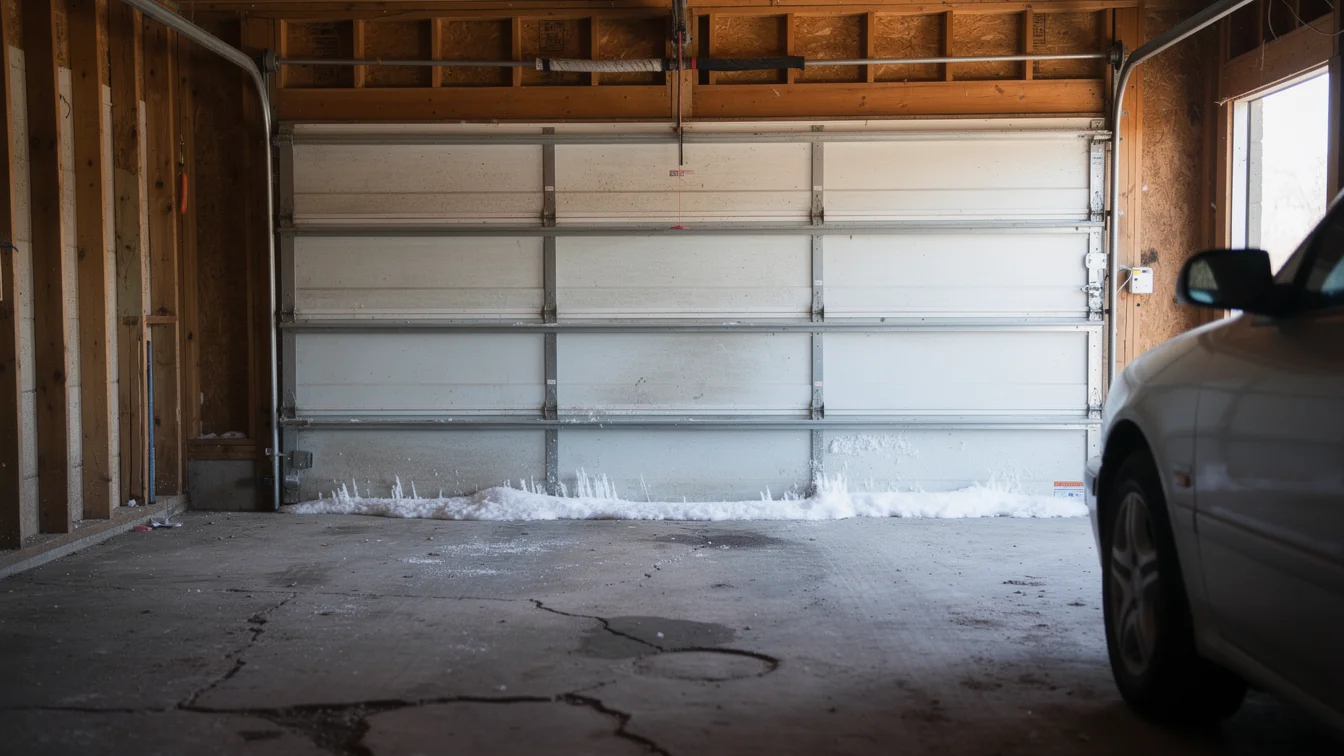
So if your house is one of the thousands built in that window, there's a decent chance the original door, or a like-for-like replacement someone put in during the 90s or early 2000s, is a single-skin or thin double-skin steel panel with no foam core. It looks fine from the driveway. It does almost nothing to stop heat loss, and in a cold-climate zone like ours, that's the whole ballgame for an attached garage that shares a wall with living space or sits under a bonus room.
This isn't a defect. It's just what normal looked like when the house was framed. The problem shows up now because insulation standards moved on and a lot of doors didn't.
What to Look At First
Before you assume you need a new door, check what you've actually got. Knock on the inside face of each panel. A hollow, tinny sound means single-layer steel with no insulation - common on houses from that 1958-2009 build window before anyone was required to put foam behind the skin. A dull thud usually means there's at least a polystyrene or polyurethane layer in there already.
Next, look at the bottom seal and the weatherstrip around the frame. On a door that old, the vinyl is usually cracked, flattened, or missing chunks, and that's often a bigger source of cold air than the panel material itself. A $20 bottom seal fixes more of the draft problem than people expect.
Check the panel-to-panel joints too. Early non-insulated doors often used thin steel that's started to oil-can or dent along the bottom two panels, since those take the brunt of plows, bikes, and backed-into trash cans over 30-plus years. If you see daylight between panels when the door's closed, that's not an insulation issue, that's a fit issue, and it's worth a look regardless of what you decide about insulation.
Doing Nothing For Now
You don't have to replace a door the day you find out it's not insulated. If the garage is detached, or isn't under conditioned space, the insulation question matters a lot less - you're heating a space you weren't trying to heat anyway, and a plain steel door is fine for years more.
Even on an attached garage, a non-insulated door that's structurally sound - straight track, good rollers, no rust-through at the bottom panel - can run another several winters if you're not chasing lower energy bills specifically. Weatherstripping and a bottom seal swap buy you real comfort for not much money, and that's usually the right first move before you spend on a full replacement.
Where I'd push you to act sooner: if the panel is already dented or rusted through at the bottom, cold-climate freeze-thaw cycles will finish the job for you, and a door that's failing structurally and losing heat is a different conversation than one that's just old-spec. Fix the urgent thing first; upgrade the insulation when it makes sense for your budget, not because a blog post told you to.
How Local Conditions Play In
This area sits in a cold, moderate climate band, which means real winter - sustained freezing stretches, not just the occasional cold snap. That's the condition a non-insulated door was never built to handle well. Steel contracts in the cold, so a single-skin panel on an older St. Charles house will flex and gap more at the seams in January than it did when it was installed, even if nothing's broken.
It also means hardware takes a harder hit. Torsion springs and rollers on a door built during that 1980s-90s run have usually seen three-plus decades of temperature swings, and lubrication that worked fine in August gets stiff and slow in a cold snap, which is when people notice their opener straining or the door closing crooked.
If you're deciding whether to insulate now or wait, the climate is the tiebreaker, not the calendar age of the door. An attached garage on a house from that era, sitting through another cold-climate winter with a non-insulated panel and worn-out weatherstripping, is losing heat every single day it's below freezing outside - that's a bigger factor than whether the door is 25 years old or 40.
Frequently asked questions
How do I know if my garage door has insulation?
Knock on a panel from inside the garage. A hollow, tinny sound means no insulation - common on St. Charles houses built before codes required it. A dull, solid thud usually means there's a foam core. You can also look at the panel edge at a seam; insulated doors are visibly thicker.
Is it worth insulating an old door instead of replacing it?
Sometimes, if the panels and hardware are sound. Insulation kits exist for retrofitting, but they only help so much on a door that's already warped or rusted at the bottom. If the structure's failing, a kit is money spent on a door you'll replace soon anyway.
Does a detached garage need an insulated door?
Usually not for comfort reasons, since you're not heating that space to living standards. It still matters for keeping stored items from freezing and for how much the door flexes in a cold-climate winter, but it's a lower priority than an attached garage under conditioned space.
Related garage door services in St. Charles
More garage door guides
Book garage door service in St. Charles
Call now or request a quote - tell us what the door is doing and where you are.