
St. Charles, IL · Garage Door Service
Garage Door Panel Replacement for St. Charles Homes
Garage door panels crack, dent, and rust on St. Charles homes built between 1958 and 2009. Here's what panel replacement actually involves and what it costs.
- Repairs & new doors
- Springs & openers
- Serving 7 nearby communities
The Symptom
You notice it from the driveway before you notice it up close: one panel sits lower than the others, or it's bowed in at the bottom like someone backed into it years ago and nobody fixed it. On steel sectional doors from the 1980s and 90s - the bulk of the stock in this part of the Fox Valley - the tell is usually rust bubbling up along the bottom seam or around a hinge bolt, the paint lifting in a ring before the metal actually gives way. On wood-composite panels from the same era you get delamination instead: the skin separating from the core after years of freeze-thaw cycling, soft spots you can press a thumb into. Sometimes it's one dented panel from a car bumper or a wind-thrown branch. Sometimes it's three or four panels going at once because the whole door is the same age and was built with the same gauge steel. Either way, the door usually still opens and closes - which is why people live with it longer than they should, until the sag throws off the roller alignment and the track starts binding too.
What the Fix Involves
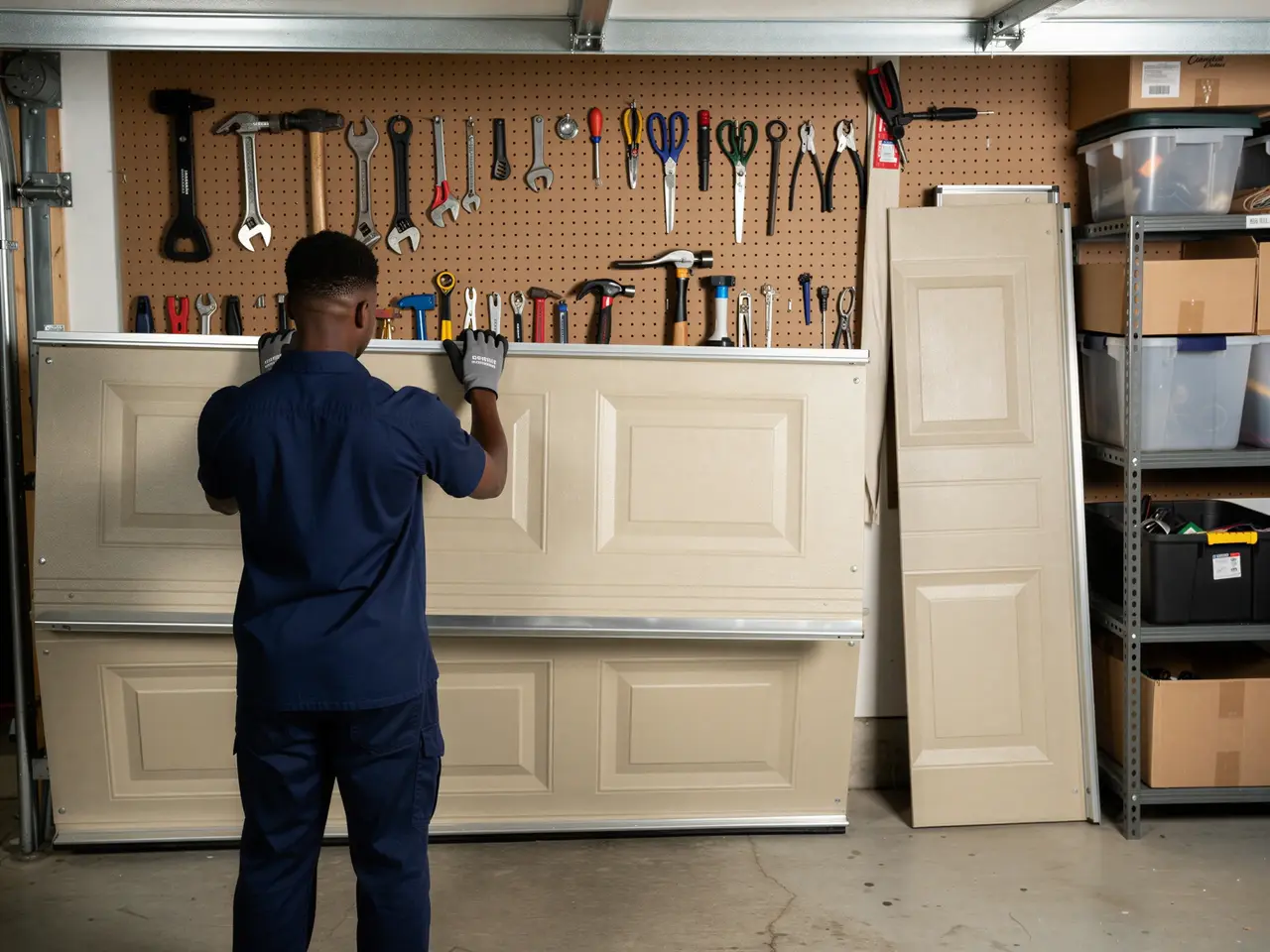
First step is identifying the panel profile and section height, because doors from different manufacturers and different decades don't share hardware even when they look alike from the curb. We pull the model plate if it's still legible, or measure the panel and match it against current stock from the same product lines that covered this area's housing boom. If the exact panel is still made, we order it, pull the damaged section, transfer the hinges and rollers over, and reinstall - usually without touching the spring system unless the extra or lighter panel changes the door's balance. If the panel's discontinued, which happens on doors from the early part of that 1958-2009 build range, we either source a close match in gauge and rib pattern or talk through replacing the full door instead of chasing a part that doesn't exist anymore. We also recheck balance and track alignment after the swap, since a single stiff or heavy replacement panel can throw off the whole assembly even when everything else is sound.
Why It Happens Here
Housing in this service area runs from 1958 up through 2009, with the heaviest concentration built in the 1980s and 90s across the named subdivisions here - which means a lot of original steel sectional doors are now thirty-plus years old, right at the point where galvanized coating thins and rust starts working from the inside of the panel out. Add a cold-moderate climate with real freeze-thaw swings, and that thin steel expands and contracts enough each winter to crack paint seals at the seams, which is where rust gets its start. On the composite and wood-skin doors from the same build years, the same freeze-thaw cycle works on glue joints instead of paint, which is why delamination shows up on roughly the same age of door as the rust does on steel ones. It's less about any one storm and more about thirty winters doing their work on a door that was never meant to last forever.
Time on the Job
A single-panel swap on a door where the part is still in production is usually a same-visit job once the panel's in hand - most of the time goes into matching the profile correctly, not the install itself. Multi-panel jobs take longer because we're transferring hardware across several sections and rechecking balance at each step. The part we can't control is lead time on discontinued or less common panel colors and profiles, which can mean a special order wait before we're back out to finish the install - we'll tell you upfront if that's the situation rather than guess. And we'll say plainly when a panel repair isn't worth doing: if the door's old enough that a second or third panel is likely to go within a year or two, replacing the whole door is usually the better use of your money than patching one section at a time.
Frequently asked questions
Can you match the panel color and profile on an older door?
Sometimes. If the manufacturer still makes that model, matching is straightforward. On doors from the earlier end of the 1958-2009 range, the exact profile may be discontinued, in which case we look for the closest current match or talk through full door replacement instead of a mismatched patch.
Will replacing one panel throw off the rest of the door?
It can. A new panel is often a slightly different weight or gauge than thirty-year-old steel, which changes how the door balances on the springs. We check and adjust balance after any panel swap rather than assume the door will sit right on its own.
Is it cheaper to replace one panel or the whole door?
Depends on the door's age and how many panels are already showing wear. If rust or delamination is isolated to one section, a panel swap makes sense. If the door is old enough that other panels are close behind, replacing the full door usually costs less over time than repeat panel jobs.
Why does rust always seem to start at the bottom panel?
The bottom panel takes the most moisture exposure and the most physical contact, and it's also where paint seals wear fastest from opening and closing. Combined with a cold climate's freeze-thaw cycling, that's typically where coating failure and rust show up first on older steel doors.
Related services
By Neighborhood
Panel Replacement across the St. Charles area
We also handle panel replacement in these St. Charles-area suburbs.
Book garage door service in St. Charles
Call now or request a quote - tell us what the door is doing and where you are.