
St. Charles, IL · Garage Door Service
Panel Replacement for Glen Ellyn's Older Doors
Glen Ellyn's housing stock runs older than most of our service area, which changes what panel repairs actually need. We bring the right sections from St. Charles.
- Repairs & new doors
- Springs & openers
- Serving 7 nearby communities
What the Fix Involves
Across most of the towns we cover, the median home was built around 1981, and the bulk of the stock is 1980s and 90s construction. Glen Ellyn runs older than that - median year built here is 1972. That decade gap matters more than it sounds. A door that went in during the early-to-mid 70s is more likely to be an older steel or fiberglass design, often on a narrower panel width than what shipped standard a decade later. When one section gets dented or rusted through, we're not just grabbing a stock panel off the truck and calling it done - we're checking the section height, the track spacing, and whether the hinge pattern still matches what's currently sold. On a 1981-built door that's usually a non-issue. On a 1972 door, it's the first thing we check, because guessing wrong means a second trip.
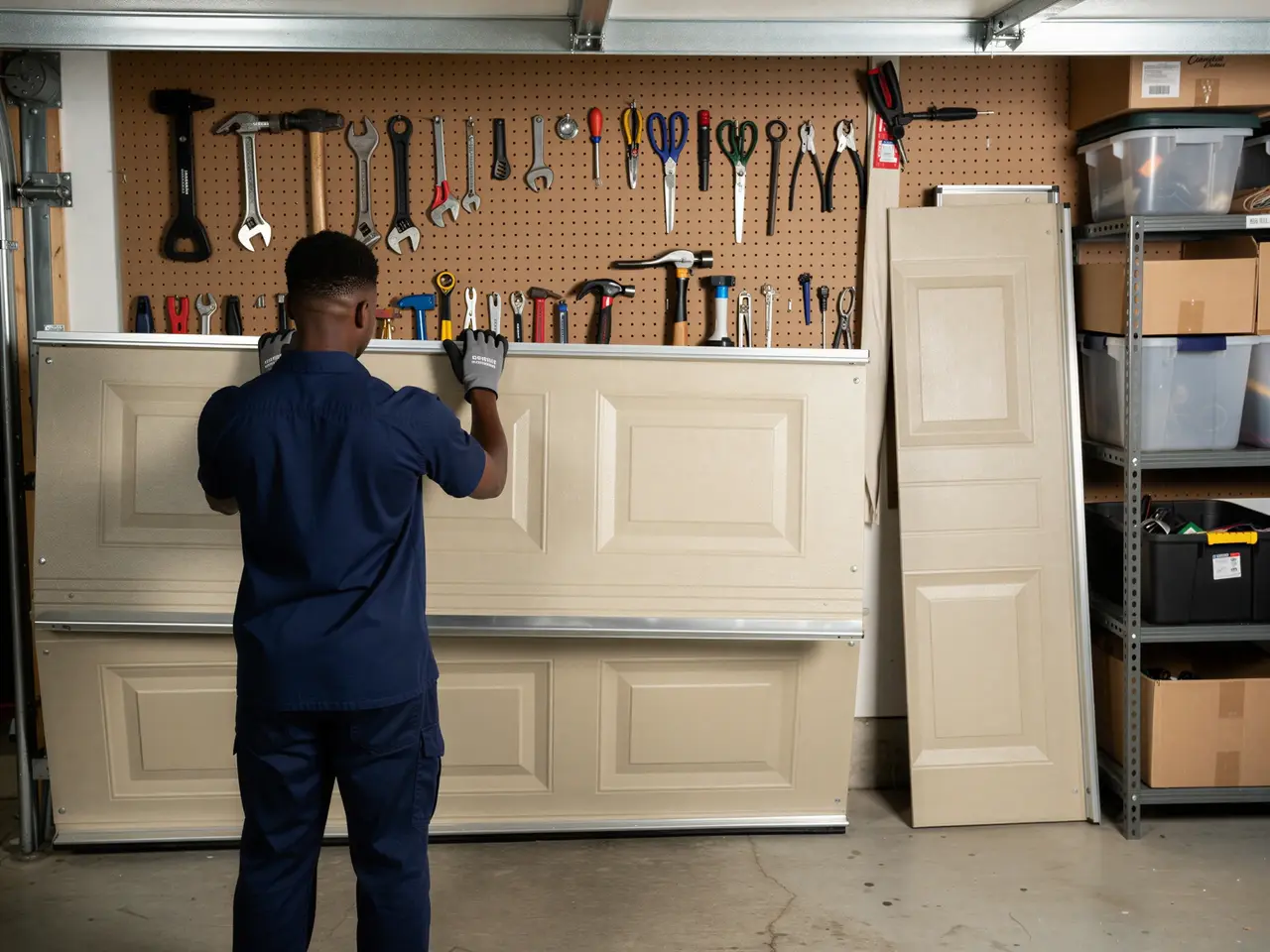
Most of the time the fix is still straightforward: pull the damaged section, match it or source a close equivalent, swap it in without touching the rest of the door. We don't rebuild the whole door for one bad panel unless the hardware around it is also failing.
Why It Happens Here
A door built in 1972 has had roughly fifty winters of cold-band weather working on it. This region sits in a moderate-cold climate, which means steel panels see real freeze-thaw cycling every year - moisture gets into seams and fastener holes, and that's where rust starts eating a panel from the inside out before it shows on the surface. On a newer door, factory coatings and tighter manufacturing tolerances buy more years before that happens. On the older stock that's common in Glen Ellyn, we see bottom panels and the sections nearest ground-level impact going first, usually from a mix of moisture and the occasional car bumper or errant basketball.
The other factor is simple wear on original hardware. A door that's over fifty years old has usually had at least one spring replacement and several roller swaps along the way, and each of those jobs can leave slightly mismatched hardware that puts uneven stress on one panel more than the others.
Parts We Carry
We stock panel sections and matching hardware sized for the eras most common across our service area, which runs roughly 1958 through 2009 in build year. For a 1972 door in Glen Ellyn, that usually means we're working with older panel widths and bolt patterns rather than current-year stock sizes. When we can match the existing panel profile, we do - it's faster and it keeps the door looking uniform instead of one new section standing out against faded paint. When an exact match isn't available, we'll say so up front and walk through the closest option before we start, not after.
Here's the honest limitation: some older panel profiles are discontinued, and if yours is one of them, we may need to order a close match or, in rare cases, recommend replacing more than one section so the door doesn't end up with an obvious mismatch. We'd rather tell you that before the job than surprise you with it on-site.
Where This Job Goes Sideways
The job gets harder when the dent or rust isn't isolated to one section. On a door built around 1972, if one panel has corrosion damage, the sections next to it have usually been exposed to the same moisture and the same winters, even if they look fine from the driveway. We check the adjacent panels before quoting a single-section swap, because finding out mid-job that panel two is also compromised means either stopping to source another part or doing a repair that won't hold.
It also goes sideways when the track or hinge hardware on an older door has been bent or shimmed over the years to compensate for a panel that was already failing. Installing a clean replacement section onto hardware that's slightly out of alignment just transfers the stress to the new piece. In that case we're honest that the real fix is adjusting or replacing the hardware alongside the panel, not just the panel alone.
Booking a Visit
We run this job out of St. Charles, and Glen Ellyn sits about 13 miles out on our coverage map. There's no local branch here - we travel to you, so when you call, it helps to know roughly how old the door is and whether the damage is one panel or spreading, since that's what determines whether we bring a single section or come prepared for more. If you're not sure, that's fine too; we can usually tell once we're looking at it in person.
See our Glen Ellyn coverage page for what else we handle in the area, or check the St. Charles panel replacement page for how this service works at the home base.
Frequently asked questions
Will a replacement panel match my door if it's from the early 1970s?
We'll try to match the existing panel profile first, since Glen Ellyn's housing runs older than most of the area we cover - median build year here is 1972. If that exact profile is discontinued, we'll tell you before starting and walk through the closest match rather than installing something that visibly doesn't fit.
Do you have a branch in Glen Ellyn?
No. We work out of St. Charles and travel to Glen Ellyn for jobs, which is about 13 miles each way. There's no local depot here, so we schedule the visit and bring what we expect to need based on what you tell us about the door.
Why does one dented panel sometimes turn into a bigger job?
On older doors - and Glen Ellyn's stock trends older than the surrounding area - panels next to a damaged one have usually taken the same winters of moisture and freeze-thaw cycling. We check adjacent sections before quoting, because a panel that looks fine can already be rusting from the inside.
More garage door services in Glen Ellyn
Book garage door service in St. Charles
Call now or request a quote - tell us what the door is doing and where you are.