
St. Charles, IL · Garage Door Service
What Actually Happens on a St. Charles Service Call
A plain look at what a St. Charles garage door service call includes, tied to the 1958-2009 housing stock and cold-climate hardware common on this side of Kane County.
- Repairs & new doors
- Springs & openers
- Serving 7 nearby communities
What Is Going On
Most calls in St. Charles start the same way: a door that groans, sticks, or won't close all the way. Because the housing stock here runs from 1958 up through 2009, with the median build year sitting around 1981, the door we show up to is very often original equipment on a house built in that late-70s to mid-90s window. That matters because the torsion spring, the extension cables, and the opener logic board from that era were built to a different standard than what's sold today. A service call starts with figuring out which era of parts we're actually dealing with before anyone touches a wrench.
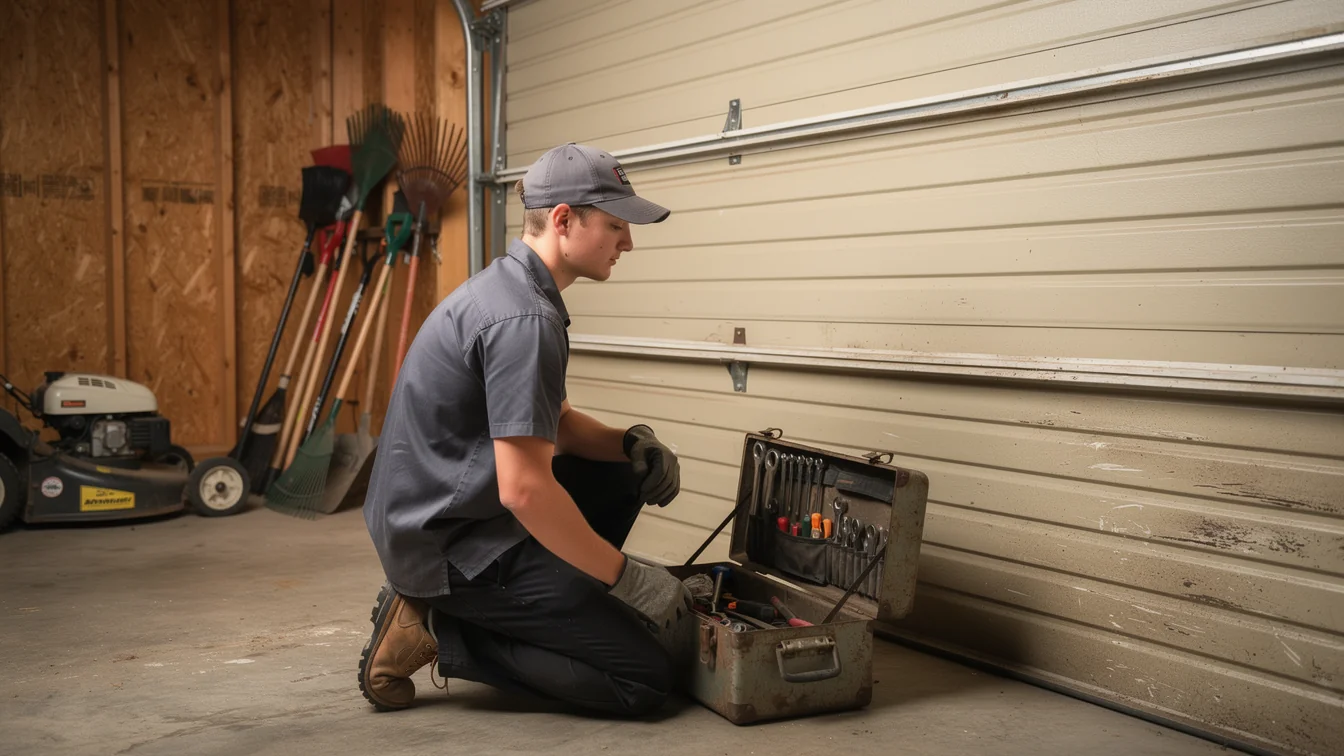
We check the obvious things first: does the door move freely by hand with the opener disconnected, is there a visible gap or sag in one of the panels, does the cable look frayed near the drum. On a house from the 1980s or 90s stock that makes up most of this area, we're also listening for the specific sound a worn torsion spring makes versus a bad roller - they sound almost identical to an owner and very different to us. The call is diagnostic first. We don't quote a repair before we've opened the door up and watched it run through a full cycle.
What to Look At First
Before we touch the opener, we look at the springs. On doors from the 1980s and 90s range that dominate St. Charles, torsion springs have usually had 15-25,000 cycles on them by now, and a spring that's at the end of its life will show uneven coil spacing or visible rust pitting even when it hasn't snapped yet. Second, we check the bottom brackets and cables - these take the brunt of winter stress when a cold door is forced open on a frozen track. Third, the opener itself: a chain-drive unit from that same building window often has a worn sprocket or a logic board that's simply aged out, not failed outright. We also look at the weatherstripping along the bottom seal, since a gap there does more damage over a Midwest winter than most owners realize. None of this is guesswork - it's the order that tells us fastest whether we're looking at a $150 adjustment or a full spring replacement.
Doing Nothing For Now
Sometimes the honest answer on a service call is that nothing needs to happen today. If a door is loud but moving true, tracking straight, and the springs show no rust or gap irregularity, we'll say so and leave the ladder in the truck. We'd rather tell an owner in St. Charles that their door has another year or two in it than sell a repair that isn't needed yet. That said, we won't tell you to ignore a cable that's starting to fray or a spring with visible flat spots - those don't get better with a cold winter sitting on top of them, and in this climate band a spring failure in January means a door stuck shut, not just a noise. The honest limitation here: we don't do cosmetic panel matching on older doors, since factory-matched replacement panels for 1980s and 90s builds are rarely still made, and we won't pretend a patch will look seamless. Sometimes full replacement is the straighter path, and we'll say that plainly instead of charging for a repair that won't hold.
How Local Conditions Play In
St. Charles sits in a cold moderate climate band, and that shows up on a service call in specific ways. Lubricant that's fine in July gums up by December, and a door that was smooth all summer can bind hard on the first sub-freezing morning because the track has contracted slightly and the rollers haven't been serviced. We see this pattern across the wider service area - Geneva three miles south, Wayne and West Chicago a few miles out, Batavia and South Elgin at five - where the same building boom put up similar doors on similar schedules, so the failure patterns repeat house to house. With a median household income of $106,250 across the area and roughly 150,753 owner-occupied houses served, most owners here are maintaining a long-term asset, not flipping it, which is part of why we check hardware condition on every call instead of just swapping the obvious failed part and moving on.
Frequently asked questions
How long does a typical service call take?
Diagnosis usually takes 20-30 minutes once we've opened the door and run it through a full cycle by hand and by opener. If the fix is a spring, cable, or roller swap, that often happens in the same visit. We don't have a fixed time figure beyond that to quote without seeing the door.
Will you replace parts I don't need?
No. If a spring or cable still has life left, we'll say so. Given how many doors in St. Charles are original to houses built between 1958 and 2009, a lot of our calls are adjustment and lubrication, not full part replacement.
Do you match older door panels?
Not reliably. Factory panel colors and profiles from 1980s and 90s builds are often discontinued, so a patched panel can look off next to the rest of the door. On older doors we're usually honest that full replacement is the cleaner route.
Why does my door act up more in winter?
St. Charles sits in a cold moderate climate band, and cold track metal plus thickened lubricant is the most common cause of a door that binds or drags starting in late fall. It's a maintenance issue more than a parts failure in most cases.
Related garage door services in St. Charles
More garage door guides
Book garage door service in St. Charles
Call now or request a quote - tell us what the door is doing and where you are.