
St. Charles, IL · Garage Door Service
How Wind Works Against a Wide Door in St. Charles
St. Charles homes built mostly between 1958 and 2009 carry wide double doors that take the brunt of wind load. Here's what to check before it becomes a service call.
- Repairs & new doors
- Springs & openers
- Serving 7 nearby communities
What Is Going On
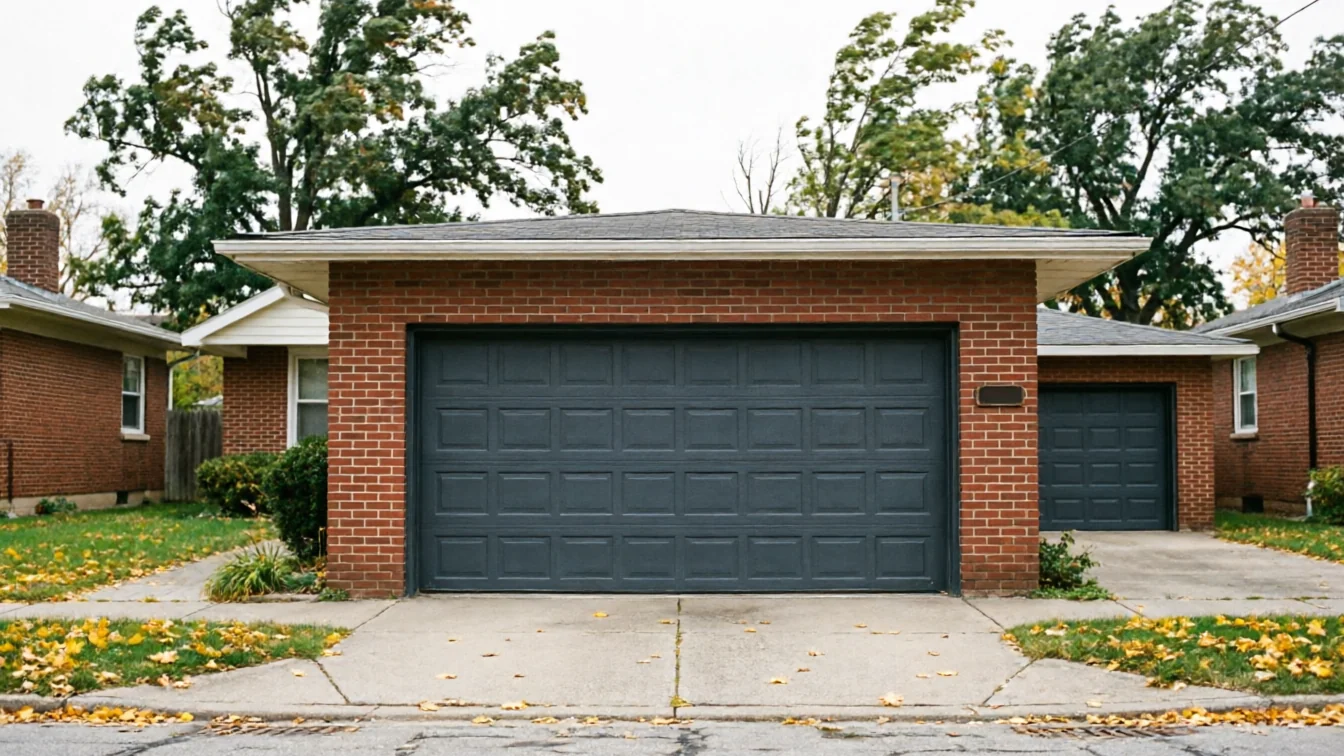
A garage door doesn't fail from wind the way a window does. It fails from flex. A single-car door is stiff enough that wind pressure spreads across the whole panel and the track takes it evenly. A wide double door - the 16-footer that became the standard size on houses built here through the 1980s and 90s - has a lot more surface area pushing against the same two tracks. Housing in St. Charles mostly dates from 1958 to 2009, with the median build landing right around 1981, which puts a large share of the local stock squarely in the era when builders went wide on garage openings but didn't always spec the bracing to match.
What happens under load is simple: the center of the door bows in or out a fraction of an inch more than the edges. Do that enough times across enough wind events and the fasteners holding the horizontal strut to the top panel start to work loose. Rollers ride slightly off-center in the track. None of it looks dramatic from the driveway. It shows up as a door that starts sagging in the middle, or one that won't seal flush at the bottom corners anymore.
What to Look At First
Start with the horizontal strut - the metal bar bolted across the top panel of a double door. On houses from the 1980s and 90s stock common across this area, that strut is often the original, sized for the building code of its decade rather than for wind load reinforcement added later. Check whether the bolts are still tight and whether the strut itself has any visible bow.
Next, look at the track brackets where they anchor to the framing, not just where they meet the door. A wide door puts more sideways pull on those anchor points than a single does, and it's usually the anchor that gives before the track itself bends.
Then check the bottom corners for daylight. If one side seals tight and the other doesn't, the panel has started to twist slightly under repeated load, and that's worth catching before a spring or cable takes the extra strain instead of the frame.
Doing Nothing For Now
Not every wide door needs intervention right away. If the strut is tight, the brackets are solid, and the door seals evenly on both sides, you can leave it alone - wind load on a well-braced double door in this area is something the hardware is built to handle for years without attention. We won't tell you to replace a strut that isn't showing stress just because the door is old.
Where we'd push back is on waiting once you've found actual movement - a bowed strut, a loose anchor, a corner gap that's new this season. Reinforcement is a short job compared to what it costs to replace a door whose panels have permanently warped. We don't carry every strut kit size on the truck for every door era, so a repair on an older wide door sometimes means a short wait on the part rather than a same-day fix. That's a real limitation, not a sales pitch - better to know going in.
How Local Conditions Play In
St. Charles sits in a cold moderate climate band, which matters more to a wide door than people expect. Steel panels contract slightly in winter cold, tightening the tolerance between roller and track at the exact time wind gusts tend to be strongest. A door that rides smoothly in July can bind or chatter in January on the same hardware, and a wide double door shows that bind first because it's carrying more panel weight through the same two tracks.
The pattern holds across this part of the Fox Valley. Housing stock a few miles out toward Geneva or South Elgin runs the same 1980s-90s era as St. Charles proper, so the same strut and bracket issues show up there too - it's a building-era problem as much as a St. Charles one. If your house falls outside that window, built well before 1958 or well after 2009, the bracing on your door was likely spec'd differently and this issue may not apply the same way.
Frequently asked questions
Is my double garage door actually at risk in normal wind, or only in a storm?
Normal gusts aren't the concern - it's cumulative flex over years. A double door built to the bracing standards common in St. Charles's 1980s-90s housing stock handles routine wind fine when the strut and brackets are sound. The risk builds slowly: loosened fasteners, a slightly bowed strut, a track anchor that's started to pull. Catching it early is cheap; catching it after the panel warps is not.
How do I know if my strut needs reinforcing without taking the door apart?
Look across the top panel from inside the garage with the door closed. A strut under stress usually shows a faint bow toward you, and the bolts at each end may have backed out slightly, leaving a gap you can see or feel. If the bar still sits dead straight and every bolt is snug, it's not showing stress yet.
Does the cold actually make this worse, or is that just marketing?
It's real. Steel contracts in cold, which tightens the clearance between roller and track. St. Charles sits in a cold moderate climate band, so that contraction happens every winter, not as a rare event. A wide door already under slight strain from wind load has less margin in that tighter clearance, which is why issues often surface in the colder months rather than summer.
Can I just add bracing myself instead of calling someone?
You can, if the hardware underneath is sound and you're comfortable working with a door under spring tension, which is the part that actually hurts people. We don't recommend DIY on anything that involves disconnecting the door from its spring system. If it's just a strut bolt-up with the door secured, that's a smaller job - but confirm the door is properly locked down first.
Related garage door services in St. Charles
More garage door guides
Book garage door service in St. Charles
Call now or request a quote - tell us what the door is doing and where you are.