
St. Charles, IL · Garage Door Service
New Garage Door Installation for Batavia's 1980s Housing Stock
Batavia homes mostly went up in the mid-1980s, which means specific door widths and header framing. We install from our St. Charles shop, 5 miles out.
- Repairs & new doors
- Springs & openers
- Serving 7 nearby communities
Parts We Carry
Batavia's housing stock centers on a median build year of 1985, which puts most garages in a narrow window: 16-foot steel sectional doors on torsion springs, with the lighter-gauge panels and single-layer steel that were standard builder-grade options through the mid-80s. Those doors rarely had foam insulation, and the openers that came with them were chain-drive units rated for a fraction of today's cycle counts.
We stock replacement sections and full doors sized for that era's rough openings, along with torsion springs wound to match the lift weight those original doors needed before owners added insulation kits or swapped to heavier doors later. We carry both non-insulated steel doors, for owners who want to match a strict builder-era look, and insulated steel or composite options for anyone upgrading past what the house came with.
One limit worth saying plainly: if your opening is a non-standard width - something a past owner cut down or widened without pulling a permit - we may need to order a custom-width door rather than pull one off the truck. That adds lead time, and we'll tell you up front if your opening falls outside stock sizes.
Where This Job Goes Sideways
The failure point on a house built around 1985 is almost always the header framing, not the door itself. Builders in that period often sized the garage opening's header for the specific door weight sold at the time - a single-layer steel door with no insulation. Swap in a heavier insulated door or a double-car replacement without checking that header, and you're loading lumber that was never spec'd for the extra weight.
The second spot: track alignment on additions or garages that were resided or re-roofed since 1985. Thirty-plus years of settling shifts a jamb by a fraction of an inch, enough that a new door's track needs shimming to run straight. We check plumb on both jambs before we hang anything, not after.
Third, and this one's about money more than structure: Batavia's median household income runs higher than much of the surrounding service area, and we see more owners here asking for insulated doors with higher R-values and quieter belt-drive openers rather than the base chain-drive replacement. That's a reasonable upgrade given the house values involved, but it's worth deciding before the install, not after, since the opener mount and header load both change with a heavier door.
What the Fix Involves
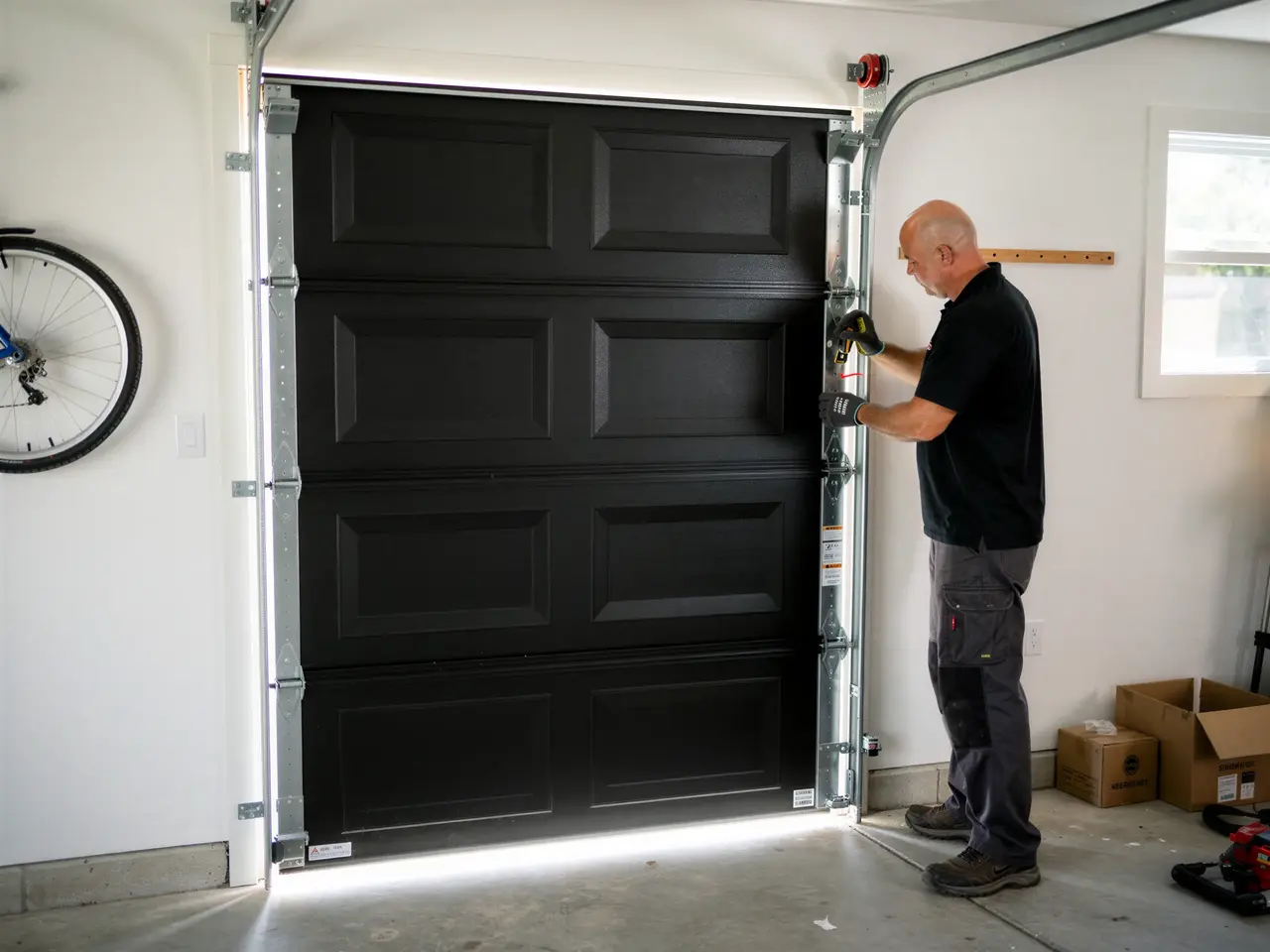
For a straight swap - same width opening, comparable door weight - we pull the old door and track, inspect the header and jambs for rot or settling, and set new track plumb before the door goes in. If you're staying with a non-insulated steel door similar to what's original to a 1985-era build, the job is usually a single visit.
If you're moving up to an insulated door or a heavier composite panel, we check the spring size against the new door's actual lift weight - this matters more on these mid-80s openings than on newer construction, because the original torsion spring was almost never sized with a 20-pound jump in mind. We re-spring rather than force an undersized spring to compensate; an undersized spring just shortens the opener's life and makes the door hard to lift by hand if the power's out.
We're coming from St. Charles, about 5 miles out, so we schedule the visit rather than offer a same-day drop-in - worth knowing if you're planning around a specific day.
Why It Happens Here
Batavia's roughly 10,378 households sit mostly in homes built when steel sectional doors had just become the default replacement for older wood doors, and that mid-80s wave is why so many of these openings share the same header depth and track spacing. It's not a flaw unique to any one house - it's what an entire subdivision built in the same five-year stretch tends to share.
The area also sits in a cold-moderate climate band, which matters less for the door panel and more for the opener's drive mechanism and the weatherstripping choice - chain-drive openers from the 80s weren't built with cold-weather lubricant in mind, and that's often why an original opener grinds or hesitates on the coldest mornings before it fails outright.
Given the median income here running above $119,000, we also see owners choosing to replace rather than patch an aging door once one spring goes, since a full insulated replacement often makes more sense long-term than matching parts for a 40-year-old panel design.
Frequently asked questions
Will a new insulated door fit my 1980s garage opening without framing work?
Usually yes for the opening width, but we check the header load first. Houses built around 1985 were often framed for a lighter, non-insulated door, so swapping to a heavier insulated door can mean reinforcing the header rather than just bolting on new track.
Do you offer same-day installation in Batavia?
We schedule Batavia jobs from our St. Charles location, about 5 miles away, rather than offering a same-day drop-in. We'll give you a scheduled window when you call rather than promise a response time we can't back up.
Can I keep my original opener with a new door?
Only if the new door's weight is close to the original's. Original chain-drive openers from the mid-80s weren't built for heavier insulated panels, and forcing one to lift extra weight shortens its life fast - we'll test the lift weight before reusing it.
Book garage door service in St. Charles
Call now or request a quote - tell us what the door is doing and where you are.