St. Charles, IL · Garage Door Service
Opener Installation for Batavia's Mid-1980s Garage Doors
Batavia homes built mostly in the mid-1980s run older chain-drive openers. See what a new installation costs and when replacement beats another repair.
- Repairs & new doors
- Springs & openers
- Serving 7 nearby communities
Parts We Carry
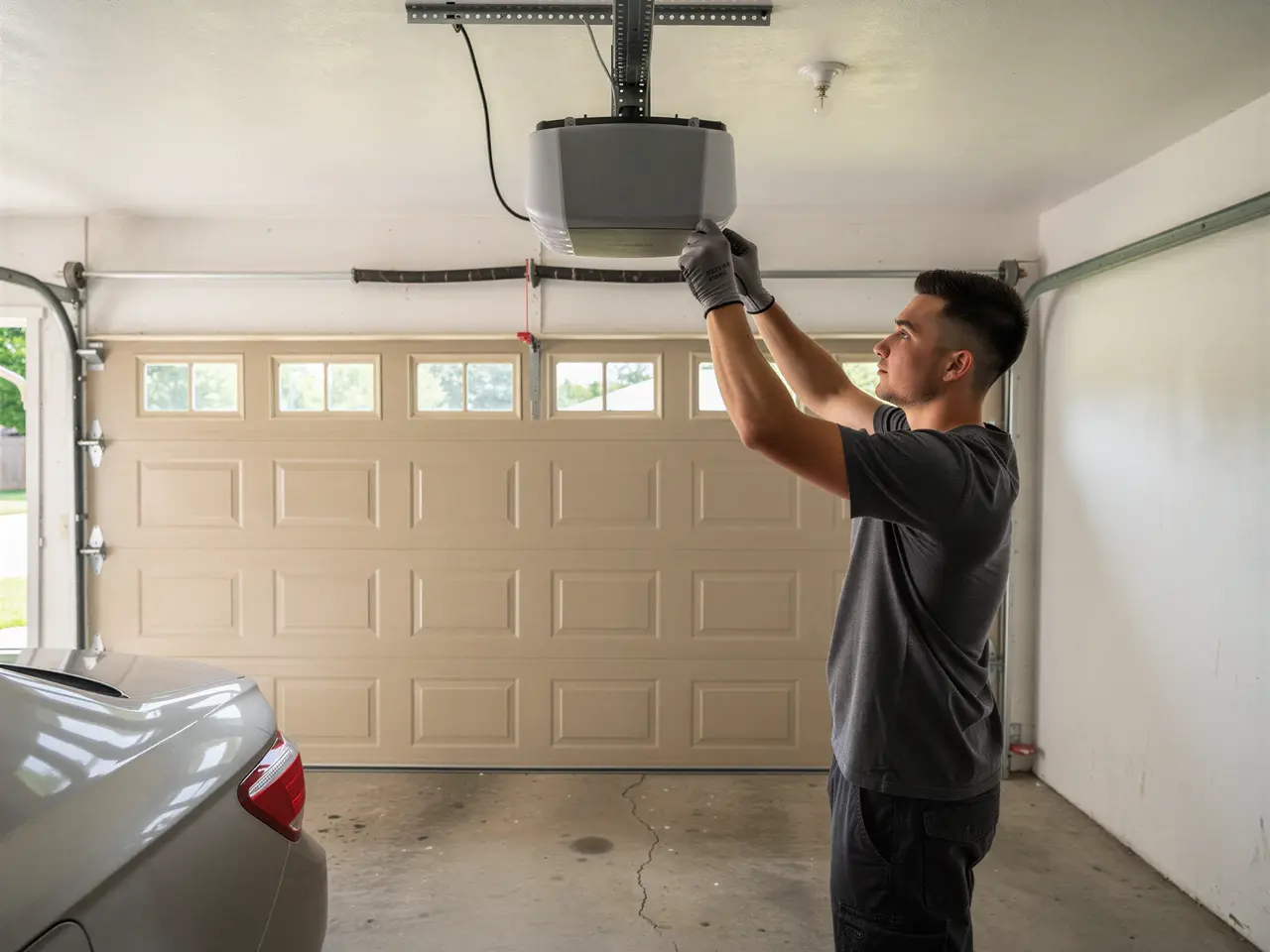
We carry belt-drive and chain-drive openers in the horsepower range that fits a standard single or double door, plus the steel reinforcing brackets a lot of 1980s door panels need before a new opener can bolt on safely. Batavia's median household income sits at $119,167, which puts most homes here above the line where a belt-drive opener with battery backup makes financial sense over the cheaper chain-drive unit - the upfront cost difference pays for itself in quieter operation and one less thing to fail during a winter outage. We stock standard rail lengths and the safety sensors required on every install, but we don't keep every proprietary remote or keypad model on the truck. If your existing opener uses a discontinued remote system, we'll order the compatible replacement rather than force a mismatch, which can mean a short wait on that one part. We travel from St. Charles, 5 miles away, so what's on the truck when we arrive is what gets installed that visit - anything special-order gets scheduled as a second trip.
Where This Job Goes Sideways
The trouble in Batavia usually isn't the opener itself - it's what the opener is bolted to. Homes built around the median year of 1985 often have the original door track and hinges, and a new opener puts different stress on old hardware than the worn-out unit it's replacing. We've opened up installs where the header above the door had sagged just enough that the new opener bracket wouldn't sit flush, which isn't something you can see from the driveway. Across the wider service area, most houses date from 1958 to 2009 with the bulk from the 1980s and 90s, so this isn't rare - it's close to the default condition for a Batavia garage. The other way this goes sideways: homeowners order an opener sized for a lightweight door and later upgrade to an insulated steel door, which is too heavy for that motor. We check door weight before we quote horsepower, because an undersized opener burns out early and that's a callback nobody wants.
What the Fix Involves
A straight swap - same track, same door, new motor - runs a few hours: disconnect the old unit, mount the new rail and head, wire the wall control and safety sensors, and set the travel limits and force settings so the door doesn't slam or stall. Where it takes longer is when the door itself is original to the house. On a home from the mid-1980s we're often also replacing worn rollers or a stretched spring that the old opener was straining against without you noticing - the motor masks a tired door right up until it doesn't. We test the auto-reverse safety feature before we leave, every time, no exceptions. One limitation worth saying plainly: if your door panel is warped or the track is bent out of true, a new opener won't fix that, and installing one on a door that's fighting its own frame just transfers the strain to the new motor. In that case we'll tell you straight that the door needs attention first.
Why It Happens Here
Batavia's housing stock clusters tightly around 1985, which puts a large share of its roughly 10,378 households into openers and doors that are now past or near the end of a normal service life - these units were never built to run forever, and 35-plus years is a long run for a chain-drive motor and a steel spring. Add the cold climate here, where winter temperature swings stiffen grease, shrink metal tolerances, and make a marginal opener motor work harder on the coldest mornings of the year. That combination - older average hardware plus cold-season strain - is why opener failures in this town tend to cluster in January and February rather than spread evenly across the year. It's also why we size openers for winter load, not just summer ease of use: a motor that struggles in July will stall out in a January cold snap. None of this is unique to one street or subdivision; it's a function of when this part of Batavia was built and what the winters here do to aging machinery.
Frequently asked questions
How much does opener installation cost in Batavia?
We don't quote a flat number without seeing the door and the existing hardware - door weight, whether brackets need reinforcing, and belt versus chain drive all change the price. We'll give you a firm number before any work starts, based on what your specific door needs.
Will a new opener fix my old door?
No. An opener only replaces the motor. If your door panel is warped, the track is out of alignment, or the springs are worn, those need separate attention - installing a new opener on a struggling door just transfers the strain to the new motor and shortens its life.
Do you carry openers for older Batavia garages on the truck?
We carry standard belt-drive and chain-drive units and the reinforcing brackets common 1980s doors need. If your existing opener uses a discontinued remote or keypad, that part may need to be ordered, which can mean a short second visit.
How far out do you come for a Batavia install?
We run out of St. Charles, about 5 miles away. We don't keep a branch or depot in Batavia, so scheduling runs through the same dispatch that covers the rest of the service area.
Book garage door service in St. Charles
Call now or request a quote - tell us what the door is doing and where you are.