
St. Charles, IL · Garage Door Service
Cable Repair for Wayne's Later-Era Garage Doors
Wayne's homes mostly went up around 1988, newer than St. Charles's average stock. That later build year means different cable hardware and a different failure pattern.
- Repairs & new doors
- Springs & openers
- Serving 7 nearby communities
Time on the Job
Wayne's housing stock centers on 1988, a good seven years newer than the 1981 median across the wider St. Charles service area. That gap matters more than it sounds. A door installed in the late 1980s almost always came with a torsion spring system and a factory-wound galvanized lifting cable running down each side of the track, not the older extension-spring rigging you still find on homes built in the 1960s closer to St. Charles itself. Cable jobs on torsion setups are more predictable to diagnose: the cable almost always fails at the drum end or where it rubs the bottom bracket, and once the spring tension is locked off with vise grips or winding bars, swapping the cable itself is a short, contained job. We're not quoting a specific arrival window for Wayne here - we run out of St. Charles and the drive is about 4 miles - but once the truck is in the driveway, this particular repair doesn't tend to drag.
What the Fix Involves
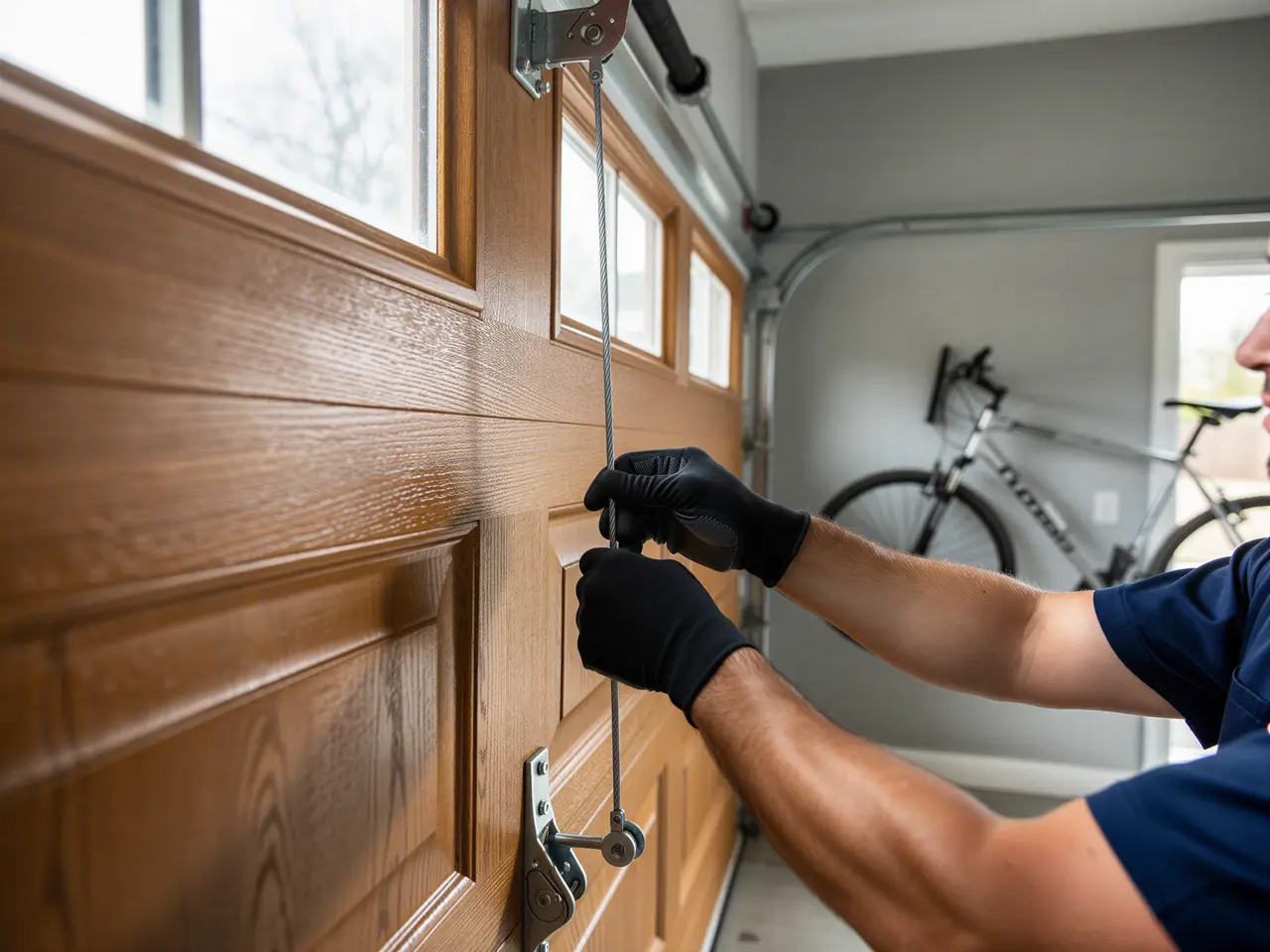
On a torsion-era door like most of what's in Wayne, the cable runs from the bottom bracket up over the drum at the top of the shaft. When it frays or jumps the drum groove, the door either hangs crooked on one side or won't move at all because the opener senses the imbalance and stops. The fix is to secure the spring, unwind it safely, pull the old cable off the drum and bracket, and run a new one matched to the door's weight and track length. We check the drum and bearing at the same time, since a cable that's worn from rubbing against a chewed-up drum groove will just fail again in a season if the drum isn't addressed too. On a double door we check both cables even if only one has failed, because they age at the same rate and a second failure a month later is a second trip that didn't need to happen.
Can You Do This Yourself
Honest answer: no, and this is the one place we'd push back if a homeowner wanted to try. A torsion spring under tension can put out well over a hundred pounds of force, and the cable is part of what's holding that load in check. Loosening the wrong thing in the wrong order is how people end up in the ER, not how they end up with a fixed door. If the cable has simply slipped off the drum and the door is otherwise sitting still and safe, it's reasonable to leave it alone and call rather than poke at it. What you can safely do yourself is confirm the symptom - note whether the door is crooked, whether one side looks loose, whether there's a visible frayed strand - and have the opener unplugged so nobody tries to run the door on a bad cable before we get there.
Why It Happens Here
This area sits in a cold, moderate climate band, and that affects cable wear two ways. Cold makes the galvanized coating on older cable more brittle, so fraying shows up as snapped strands rather than slow stretching. It also stiffens the grease in the drum bearing, which means a cable that's riding slightly off-track in summer can bind and chew through faster once temperatures drop. Because Wayne's homes cluster around that 1988 build year, most of the cable we see here is original or a prior like-for-like replacement on the same torsion hardware - not the mismatched extension-spring patch jobs that show up on older housing stock. That's a more consistent repair to diagnose, even if the climate still does its part to wear the cable down over the years.
The Symptom
The most common call is a door that's hanging crooked - one bottom corner sits lower than the other, sometimes by a few inches. Sometimes the door just stops partway and the opener strains against it. Look at the cable itself where it wraps the drum near the top corners of the door: a frayed cable looks like a wire brush, with individual strands sticking out, and it's usually close to letting go entirely by the time it's visible without climbing a ladder. Don't run the opener once you see this. A cable that's partially failed can snap the rest of the way while the door is moving, and on a double door especially, that drops serious weight fast. Unplug the opener, leave the door where it sits, and call.
Booking a Visit
We cover Wayne out of our St. Charles shop, about 4 miles away, along with the rest of the towns in this part of the county. If you're not sure whether what you're looking at is a cable problem or something else, see our St. Charles cable repair page for the broader rundown, or check Wayne's coverage page for the rest of what we handle in your area. Either way, describing what you see - crooked door, frayed strand, door stuck partway - helps us bring the right parts the first trip.
Frequently asked questions
Is cable repair different on a newer door like the ones in Wayne?
Mostly in a good way. Homes here tend to date to around 1988, which usually means a torsion spring system with a factory cable and drum setup. That's more predictable to repair than the older extension-spring rigs on homes from the 1960s, where cable and pulley wear is less uniform and parts have sometimes been swapped over the years.
Can I drive the car out if one cable has snapped?
Not safely. A door with one broken cable is unevenly supported and can drop or twist further if you try to lift it by hand or run the opener. Leave the door where it is, unplug the opener so nothing triggers automatically, and call for a repair before moving the car.
Do you carry cable stock on the truck for same-day fixes?
We don't quote a guaranteed same-day window for Wayne specifically since we run out of St. Charles, about 4 miles off. Call and describe the door - length, single or double, torsion or extension spring if you know it - and we'll tell you what we can bring.
Book garage door service in St. Charles
Call now or request a quote - tell us what the door is doing and where you are.