
St. Charles, IL · Garage Door Service
Garage Door Repair for Geneva's 1980s Housing Stock
Geneva homes went up around 1986 and many still run original torsion springs and chain-drive openers. We repair what that era's hardware actually fails at.
- Repairs & new doors
- Springs & openers
- Serving 7 nearby communities
Why It Happens Here
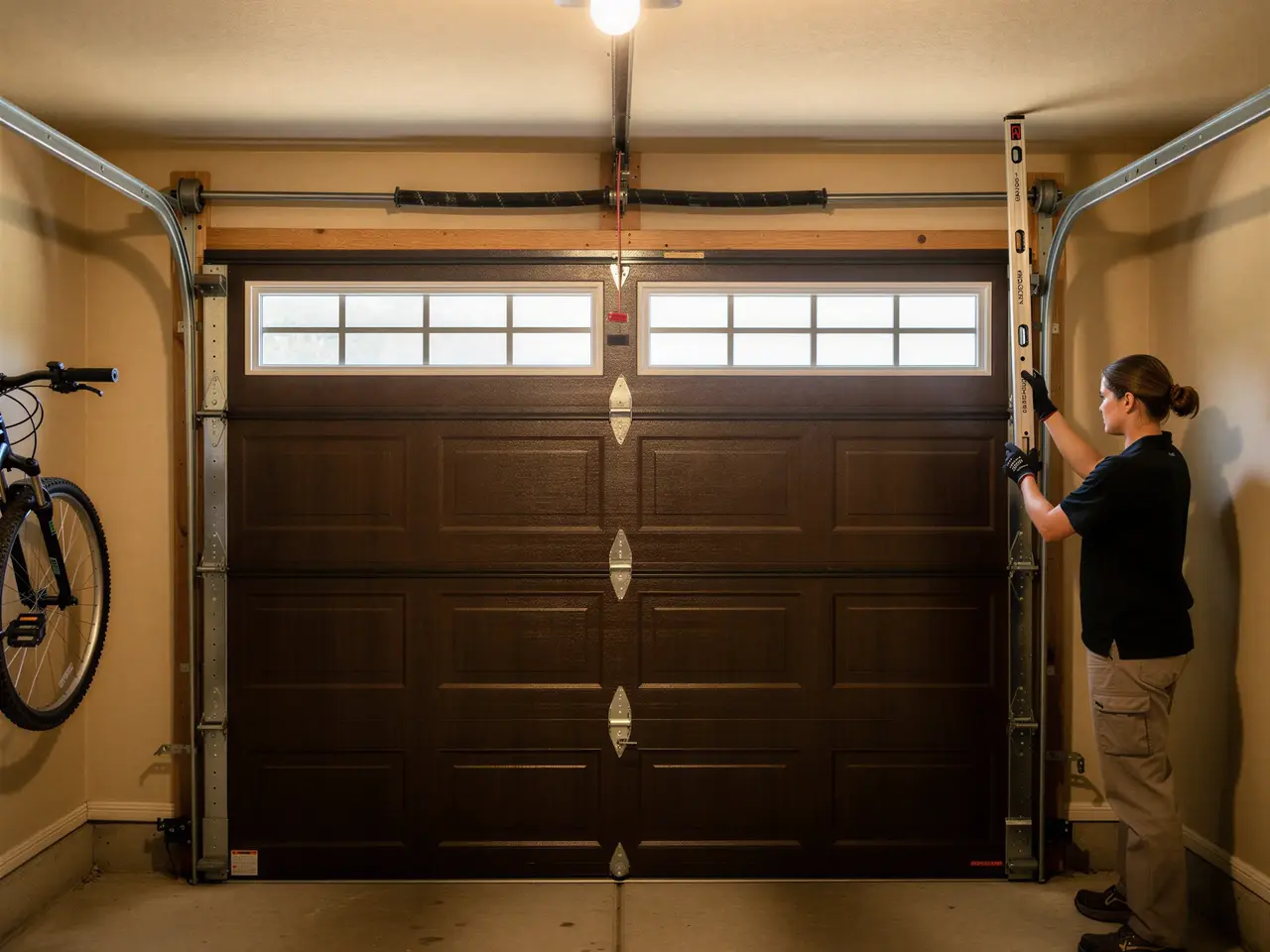
Geneva's median house was built in 1986, and that one number explains most of the repair calls we get from this town. A door installed when the house went up has had roughly four decades to wear through its original parts, and in a lot of these homes, nobody has touched the hardware since. The torsion spring on the header is probably the spring the builder hung. The opener is probably the chain-drive unit from the same renovation-free timeline. None of that is unusual - it's just what happens when a town's housing is this tightly clustered around one construction era instead of spread across fifty years of remodels.
With about 8,199 households in Geneva, you've got a lot of garages built to the same spec, which means a lot of springs rated for roughly the same cycle life hitting the end of it around the same years. Add the area's cold winters - stiff grease, metal that contracts, lift cables that lose a little flex every freeze-thaw - and a spring or roller that was already near the end of its life gives out. It's not bad luck. It's the math of a house built in 1986 still running 1986 hardware.
The Symptom
The calls from Geneva tend to follow a pattern tied to that original equipment. A door that used to go up smooth now hesitates partway, or the opener motor strains and clicks without lifting the panel - a torsion spring losing tension does exactly that. Sometimes it's louder: a bang from the garage, then the door won't budge, which is a spring that's actually broken rather than just weak.
On the opener side, original 1980s chain-drive units start grinding or slipping on the sprocket, especially once the chain has stretched past what the tensioner can take up. If the door reverses right before it closes, or closes a couple inches and bounces back, that's often the safety sensor or the close-force setting drifting on a unit that old - not a new fault, just an old part finally announcing itself. None of these are mysterious failures. They're what original 1986 hardware does on a schedule, and the fix is almost always matched to which specific part gave out.
Time on the Job
A spring swap on a standard double door, done right, is usually an hour or two of actual work once the truck is on site - balancing the door, setting spring tension correctly, checking the cable and drums while everything's apart. Opener repairs vary more: swapping a sensor or a logic board is quick, but a full opener replacement on an original 1980s unit takes longer because the mounting and wiring rarely match a modern unit without some adjustment.
We don't pad these numbers or promise a tighter window than the job actually needs. A rushed spring job on an old door is how you end up back in the garage a month later with a cable off the drum. What we can say is that Geneva sits close - about three miles from our St. Charles base - so getting a truck there isn't the bottleneck. The work itself still takes the time it takes.
Can You Do This Yourself
Some of this is fair game for a homeowner - lubricating rollers and hinges, tightening loose hardware, swapping weatherstripping along the bottom of the door. None of that needs a call.
The torsion spring is not in that category. A spring on a double door is wound under enough tension to break a wrist or worse if it lets go while you're working on it, and the winding bars and tools to do it safely aren't things most garages have sitting around. We won't talk anyone through doing their own spring job over the phone, and if you've got an original 1986 spring that's never been replaced, assume it's near the end of its rated life regardless of how it looks. That's the one honest line we draw: lubrication and hardware tightening, yes - spring tension, no.
Where This Job Goes Sideways
The complication we run into most in Geneva isn't the spring itself - it's what's attached to it. An original 1986 opener often isn't compatible with a modern replacement spring kit's safety features, or the drums and cable length don't match what's stocked on the truck because the door was a slightly different spec than what's sold today. When that happens, a same-day spring swap can turn into a parts-order wait.
The other place it goes sideways is income-driven, in a specific way: Geneva's median household income runs well above the broader service area's average, and we see more owners here choose full door or opener replacement over patching a 35-year-old unit once one part fails, since the rest of the hardware is on borrowed time anyway. That's not a sales pitch - it's just what the math looks like once you're replacing a second or third original part on the same door inside a few years.
Frequently asked questions
Why does my opener from the 1980s keep failing in winter?
Original opener grease thickens in cold weather, and a chain-drive unit built around 1986 wasn't engineered for decades of that cycle. Combined with a stretched chain or worn sprocket, cold mornings are when the strain shows up as grinding, slipping, or a door that stalls partway open.
Is it worth replacing just the spring on a door this old?
Often yes, if the rest of the hardware - track, rollers, opener - is in reasonable shape. But if the opener is original to the 1986 build too, replacing one part alone sometimes exposes the next one failing within a year or two. We'll tell you honestly which situation you're in before you pay for anything.
Do you have a branch in Geneva?
No. We work out of St. Charles and cover Geneva from there, about three miles away. There's no separate Geneva office or stock point - the truck and the parts come from the same base that covers the rest of this area.
Book garage door service in St. Charles
Call now or request a quote - tell us what the door is doing and where you are.