
St. Charles, IL · Garage Door Service
Spring Repair for Geneva's Mid-1980s Garage Doors
Geneva's garage doors mostly date to the mid-1980s build wave. We cover broken torsion and extension springs here, 3 miles out from our St. Charles base.
- Repairs & new doors
- Springs & openers
- Serving 7 nearby communities
Why It Happens Here
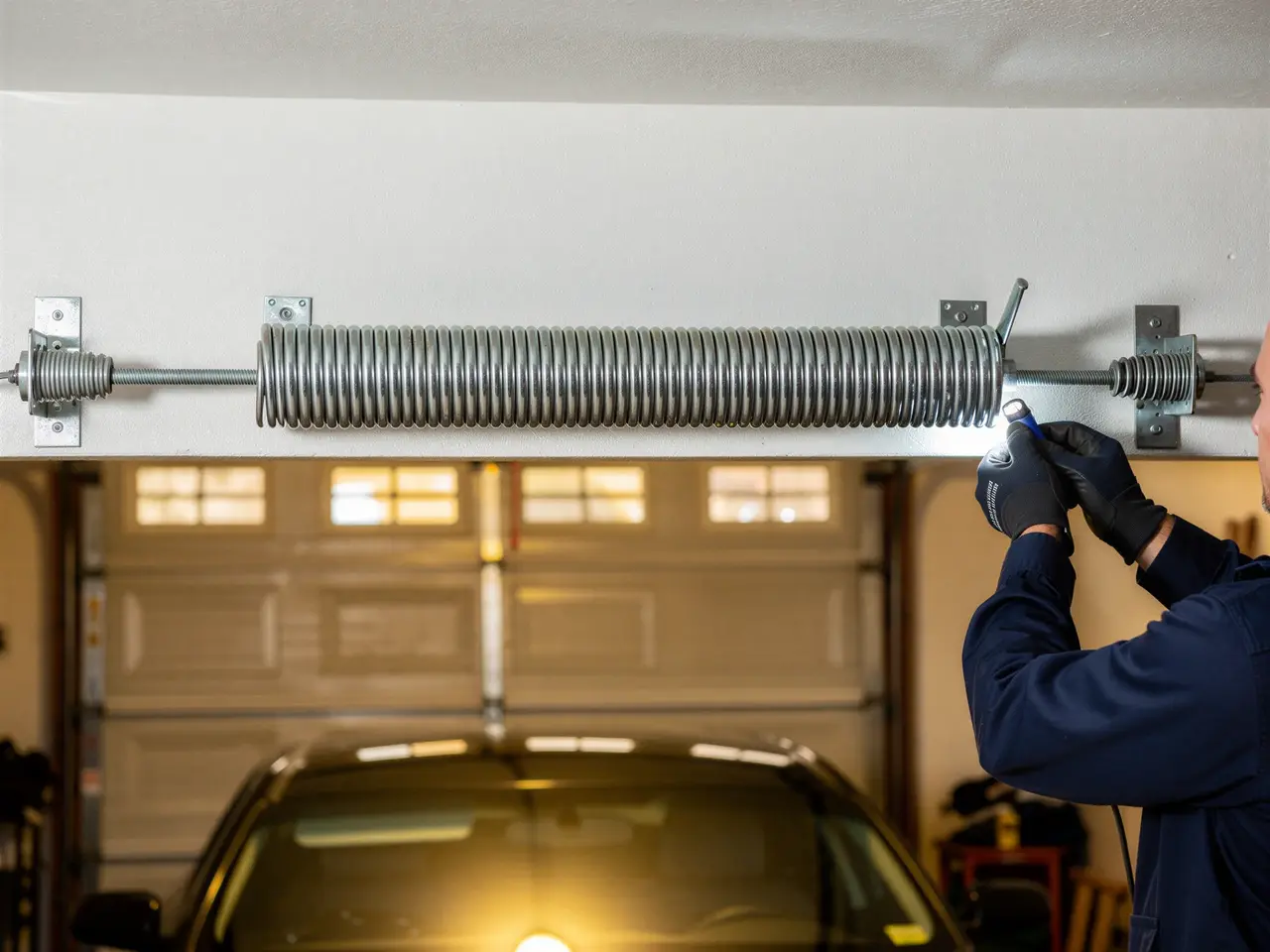
The fault we see most in Geneva is a torsion spring that's simply worn out its cycle count, not snapped from cold or abuse. That's because of when the houses went up. Geneva's housing stock centers on 1986, which puts a huge share of these garages at somewhere between 35 and 40 years of daily openings and closings on their original spring sets. Steel fatigues on a cycle count, not a calendar, and most residential torsion springs are rated for 10,000 cycles - call it 7 to 10 years of average use before they're due. A door original to a 1986 build has gone through that rating three or four times over.
What this means on the ground: when we get a call from this part of our coverage area, we're rarely dealing with a door that was improperly installed. We're dealing with hardware that did its job for decades and finally gave out. The spring size and mounting style common to that era - standard torsion bar above the door, sometimes a single spring where a heavier door really wanted two - shows up again and again. It's a predictable fault, which makes it a fast diagnosis once we're on site.
The Symptom
The classic sign is a door that won't budge, or one that the opener strains against and then reverses. If you pull the emergency release and try to lift the door by hand and it feels like dead weight instead of lifting with some resistance and staying put partway open, the spring is gone. A door that slams down fast on the last foot of travel instead of settling is another tell - that's a spring that's lost tension gradually rather than snapped outright.
Some owners hear it before they see it: a loud bang from the garage, often when nobody's touched the door, is a torsion spring letting go under tension. Don't run the opener after that sound. Running an opener motor against a broken spring puts the full lifting load on the drive gear, which turns a spring repair into a spring-and-opener repair.
Time on the Job
A straightforward torsion spring swap on a single-car or double door, parts on hand, generally runs under two hours once we're set up. Doors with the heavier spring pairs sometimes found on wider 1980s-era double garages take a bit longer because both sides need to come off balance and back evenly. We're not quoting a drive-time estimate here - Geneva sits about 3 miles from our St. Charles base, close enough that it doesn't add meaningfully to the day.
Can You Do This Yourself
We'll say this plainly: don't. A torsion spring under tension can cause serious injury if the winding bars slip or the wrong tool is used, and that risk doesn't change based on how handy you are. This isn't like replacing a roller or tightening hardware. The honest limitation here is that we don't talk anyone through a DIY spring swap over the phone, and we won't sell you just the part for a self-install. If your door is original to the mid-1980s and you're hearing or seeing any of the symptoms above, the right move is to stop using the door and call.
Where This Job Goes Sideways
The job gets harder, not when the spring itself is unusual, but when a homeowner has already tried to force the door open or closed after it jammed. Forcing a door with a broken spring can bend the track or pull a cable off its drum, turning a one-part repair into two or three. We also run into doors where the opener has been straining against a failing spring for weeks before the final break, which can burn out the drive gear or capacitor on the motor. Neither of those add-ons is common, but they're the reason we check the full door and opener, not just swap the spring and leave. With roughly 8,199 households in Geneva and most of them tied to that same mid-1980s build window, we expect to see this fault pattern again - but we still inspect each door on its own before we quote the job.
Frequently asked questions
How old does a spring usually get before it breaks in Geneva?
Most residential torsion springs are rated around 10,000 cycles, roughly 7 to 10 years of normal use. Since Geneva's housing stock centers on a median build year of 1986, a lot of original hardware here has gone through that cycle count several times over, which is why we see failures tied to age rather than misuse.
Do you carry spring parts for older double doors?
We stock common torsion spring sizes used on single and double garage doors from that era. Less common setups, like dual-spring configurations on wider doors, may need us to confirm the exact wind and size on site before the job is scheduled.
Is it safe to open the door by hand after a spring breaks?
You can pull the emergency release to move the door manually, but don't try to force it if it feels like dead weight. That's the tension of the broken spring you're fighting, and forcing it risks bending the track or pulling a cable loose.
How far is Geneva from your base in St. Charles?
About 3 miles. We work Geneva as part of our regular coverage area out of St. Charles.
Book garage door service in St. Charles
Call now or request a quote - tell us what the door is doing and where you are.