
St. Charles, IL · Garage Door Service
New Garage Door Installation for Geneva's 1980s Housing Stock
Geneva homes mostly went up around 1986, which means a specific generation of door hardware. See what that means for a new install, from the crew based 3 miles away in St. Charles.
- Repairs & new doors
- Springs & openers
- Serving 7 nearby communities
Why It Happens Here
Geneva's housing stock centers on 1986, which puts most garages here squarely in the builder-grade era: steel doors with little or no insulation, hung on torsion springs sized to the lighter panels of that period. That's a different animal than the pre-1960s one-piece doors you'll find in older pockets of the wider St. Charles service area, and it's a different animal than the double-insulated doors going up in newer construction a town or two over. When a Geneva homeowner calls about replacement, the conversation usually starts with a door that's done 30-plus years of work on original hardware - springs that have long outlived their cycle count, tracks bent from age rather than one bad bump, and openers that predate anything with a battery backup or rolling code. New installation here isn't about fixing a fault, it's about swapping out a whole system that was never built to last forever in the first place. With median household income in the area at $136,621, most of the calls we get aren't about stretching a repair - they're about doing the replacement right the first time.
The Symptom
The giveaway in a Geneva garage is usually the door itself before anything breaks: a single steel skin, visible dents from 30 years of use, and a gap under the bottom seal you can feel a draft through in January. Given the area sits in a cold moderate climate band, that gap matters more here than it would somewhere milder - an uninsulated 1986-era door does nothing to keep a cold garage from pulling heat out of an attached living space. Owners also notice the opener struggling: a worn 1980s or 90s chain-drive unit groaning on cold mornings, or a remote that's stopped working reliably. None of that means the opener is unsafe, but it does mean the whole system - door, spring, track, opener - is old enough that patching one part is a short-term fix on borrowed hardware.
Time on the Job
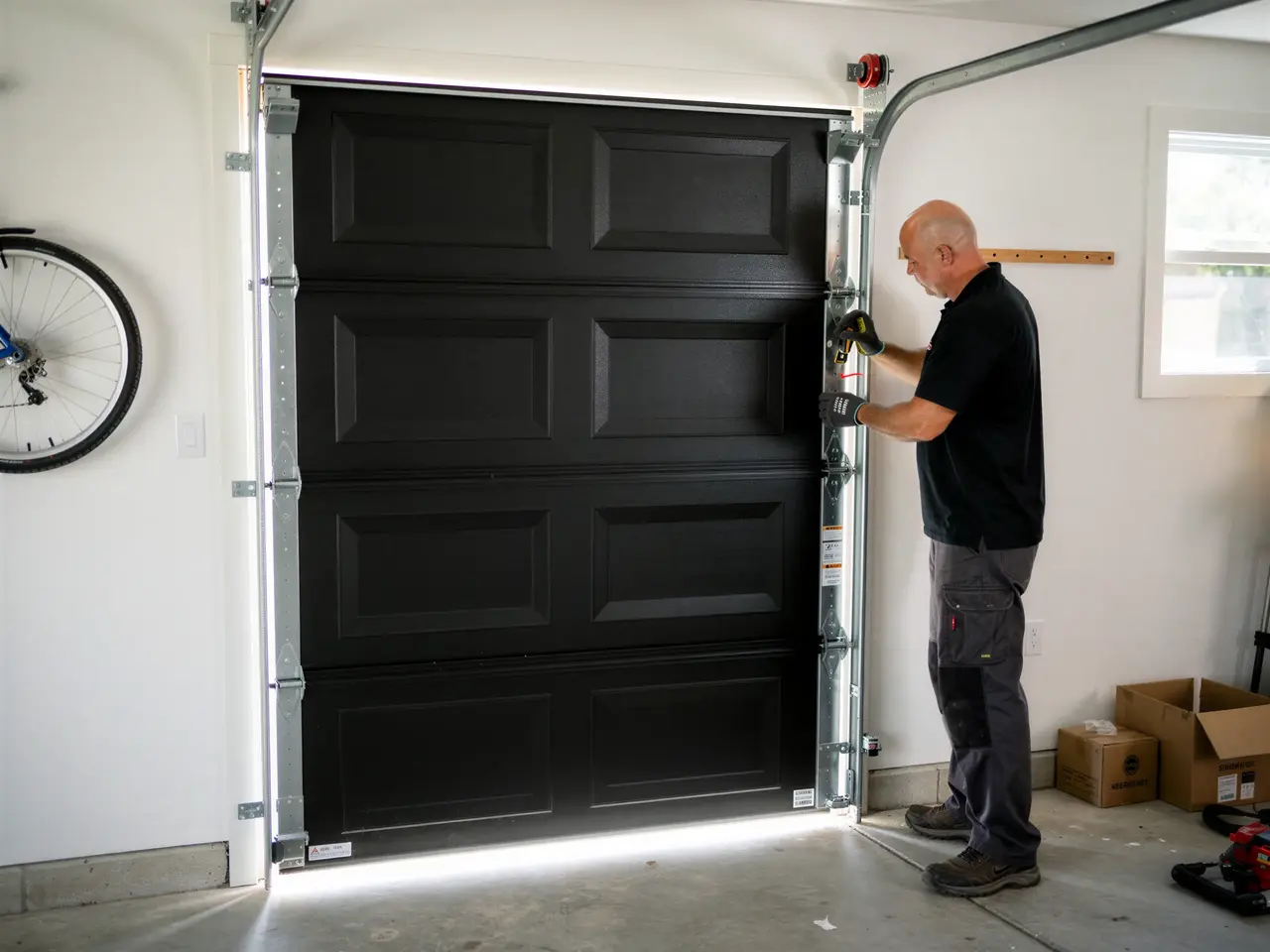
A full door swap on a standard two-car opening, on a house from Geneva's 1980s building wave, is a half-day job in most cases - old door and track out, new door, new springs sized to the new panel weight, and the opener reconnected or replaced. We don't give you a number we can't back up with a visit, since the actual time on site depends on what the old hardware looks like underneath, whether the opening is standard or has been modified at some point, and whether the opener is being replaced at the same time. What we can tell you is that houses from this era rarely have surprises buried in the framing - it's the hardware that's tired, not the structure.
Can You Do This Yourself
A new door, by itself, is not a one-person Saturday project, and it's not a job we'd recommend as a DIY even for a handy homeowner. The springs on a 1980s door are wound under real tension, and matching new spring size to a new panel's weight is where most self-installs go wrong - too light and the opener strains and burns out early, too heavy and the door won't stay down. Panel alignment and track plumb also matter more than people expect; a door that's off by a little at the top binds for years afterward. If you're set on doing some of the work yourself, pulling the old door and clearing the opening before we arrive is reasonable and saves time. The spring and track work is where we'd tell you to stop and call.
Where This Job Goes Sideways
The most common surprise on a Geneva install is an opener bracket or header board that was never built for a heavier insulated door - something that wasn't a problem when the original builder-grade door went up in 1986, but matters the moment you upgrade. That's a quick fix on site, not a reason to delay, but it's also the kind of thing that turns a quoted half-day job into a slightly longer one. The honest limitation here: if the opening itself is out of square or the header's rotted from an old water issue, that's carpentry, not garage door work, and we'll tell you to get that fixed first rather than hang a new door on bad framing. We travel from St. Charles, about 3 miles out, so there's no local branch in Geneva - just a crew that comes to you with the right spring sizes already in the truck.
Frequently asked questions
How old is a typical garage door in Geneva before it needs full replacement?
Most of the original doors we see in Geneva date to the area's main building period around 1986, which puts a lot of them past 30 years old. Steel doors from that era usually show their age through dents, rust at the bottom panel, and worn rollers well before the door itself fails outright - that's usually the point to plan replacement rather than wait for a breakdown.
Will a new insulated door actually make a difference in a Geneva garage?
Given the area's cold moderate climate, swapping an original uninsulated 1980s steel door for an insulated one noticeably cuts the draft in an attached garage, especially one with living space above or beside it. It won't turn the garage into conditioned space, but it closes the gap the old single-skin door left.
Do you have a shop in Geneva?
No - the crew is based in St. Charles, about 3 miles away, and comes to you for the install. There's no local branch or drop-off location in Geneva itself.
Can I keep my old opener with a new door?
Sometimes, if the opener is in good working order and rated for the new door's weight. But most openers original to a 1986-era house are well past their expected service life, so we'll check it on site and tell you honestly whether it's worth keeping or replacing alongside the door.
Book garage door service in St. Charles
Call now or request a quote - tell us what the door is doing and where you are.